
Today I want to talk about something that really gets to me. I often see famous coaches on Instagram saying, “If you’re a beginner, start with this. Do these exercises. Learn these skills.” But personally, I don’t find many of the exercises and skills they recommend particularly beginner-friendly.
One of the most common examples is the tuck planche. “If you’re a beginner, you should be able to do a tuck planche within six months or a year.”
Why?
If you’re a coach, you know that this skill is very challenging for many people starting calisthenics. If we assume everyone starts at 20 with plenty of time, energy, and motivation, then yes, I can understand it. With a good starting point and favourable genetics, perhaps they can achieve it in six months or a year.
But what about Mrs Rose, who comes to a class or decides to hire a calisthenics coach? You cannot expect her to achieve the same skills in the same amount of time. You have to consider the person in front of you: their age, genetics, training background, and how much time they can realistically dedicate to training.
And it’s not only about building muscle strength. These skills also require time for the tendons and other structures around the joints to adapt. That process can take longer than muscular adaptation, so feeling stronger doesn’t necessarily mean your body is ready for the full demands of a skill.
That’s why I want to go through some exercises that are often labelled “beginner skills”, but that I wouldn’t actually consider beginner exercises.
1.GERMAN HANG
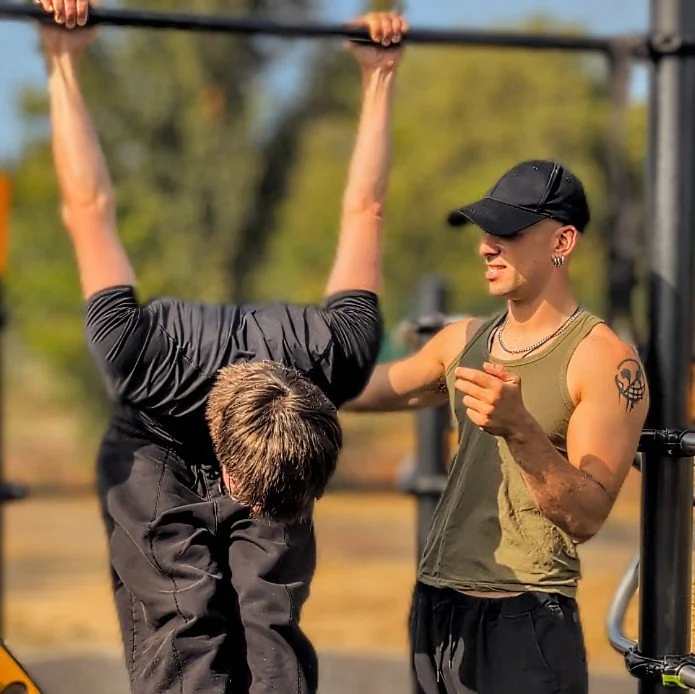
This is one exercise that I honestly never understood seeing on a beginner list. Just look at the position. How can we expect someone with no previous experience to start by hanging with their arms that far behind their body? For me, that’s a very demanding starting point.
Let’s analyse the movement.
A German hang is a static position on a bar or gymnastics rings, where your body hangs beneath your hands with your arms straight behind your torso. Your shoulders move into deep extension; in other words, your upper arms travel behind your body.
You often enter this position by rotating backwards through an inverted hang. That rotation is part of the skin the cat: the German hang is the held position at the end, while the skin the cat involves moving into it and returning under control.
So we’re talking about an exercise that combines a considerable amount of shoulder mobility with the ability to tolerate and control your body weight in that position. Having enough flexibility to reach it and having the strength to manage it are two different things.
That’s why I wouldn’t automatically call the full German hang beginner-friendly. It might be an early skill within gymnastics or preparation for more advanced calisthenics movements, but that doesn’t mean it’s an appropriate starting point for someone who has just started exercising.
Before introducing it, I would rather build a foundation with exercises such as body rows, alongside gradual work on shoulder extension. Depending on the person, that could include a supported reverse tabletop or controlled movements where you gently lift your arms behind your torso. Even these exercises need to be adjusted to the person’s current range and ability.
Body rows alone won’t prepare you for the full position, but they can contribute to that general strength foundation. You still need to develop control and strength specifically with your arms behind your body.
If I eventually introduced the German hang, I would start with assistance—for example, using low rings with the feet supported to control how much weight goes through the shoulders. I would want the person to control both the depth and the exit, rather than simply dropping into the deepest stretch they can reach.
And I wouldn’t decide they were ready just because they had been training for six months. What matters is how they move, what they can control, and how they respond to the preparation.
For me, calling something a beginner exercise should mean looking at what it asks of the beginner, not simply where it sits on a list of calisthenics skills.
PULL UPS
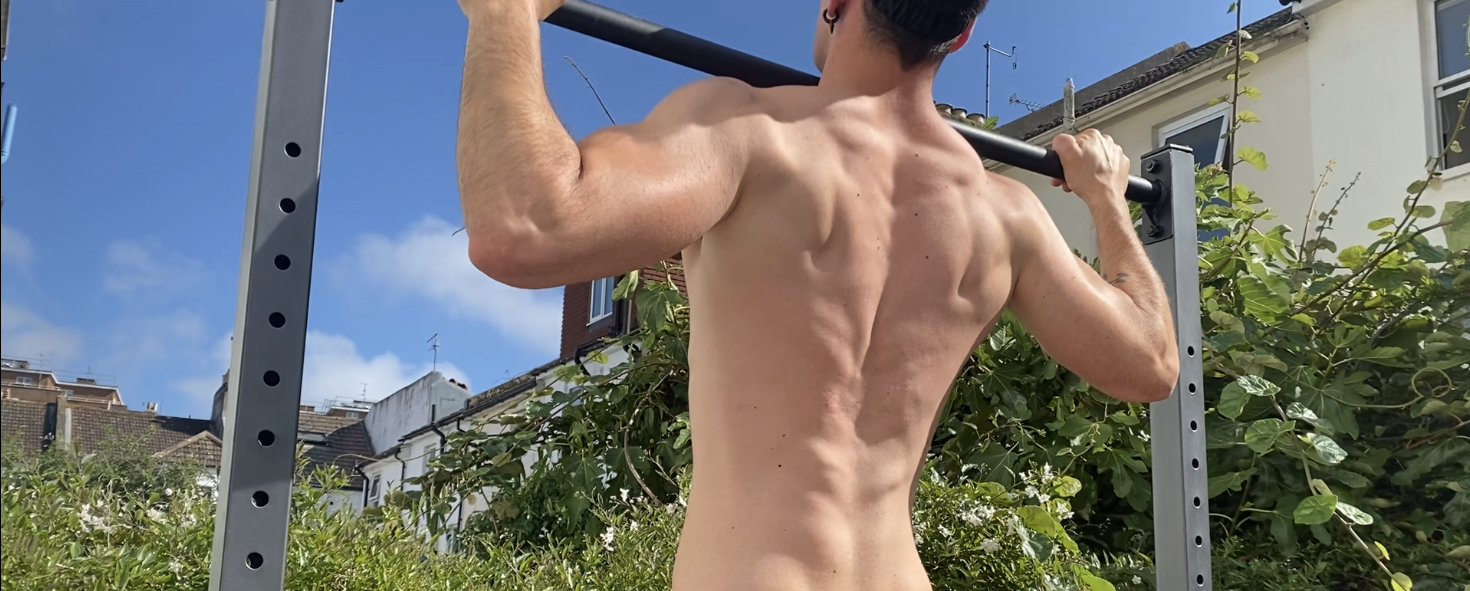
The next one might surprise you: pull-ups.
“Get your first pull-up. It’s easy, just use a band, do this, do that.”
Honestly, this drives me a little mad. And this is coming from someone who can do 30 pull-ups in a row, a pull-up with almost 70 kg added, and 15 pull-ups with 30 kg.
Learning pull-ups came quite easily to me. But coaching other people has shown me that this is far from everyone’s experience.
Body weight matters a lot. You’re lifting your whole body, so the amount of pulling strength you have relative to your weight makes a big difference. Your training background, body proportions, and muscle distribution also influence where you’re starting from.
Some people already have a strong upper body when they start calisthenics, and they get their first pull-up quickly. Others need considerably more time to build that strength. Motivation and consistency matter, of course, but motivation alone doesn’t make the movement easy.
And I’m talking about a good-quality repetition, not simply getting your chin over the bar somehow. A pull-up requires grip strength, coordination between your shoulders and elbows, and the ability to control your body throughout the movement.
That’s why, for many beginners, I prefer starting with body rows, also called Australian pull-ups. You can adjust the difficulty by changing your body angle and foot position, making it much easier to find a variation that the person can perform with control.
With pull-ups, people sometimes choose a progression that is still too demanding, even with a band. They struggle through every repetition, lose control of the movement, and keep trying to do more.
In my coaching experience, some people also develop discomfort around the elbow while working on pull-ups. Sometimes it’s on the inside or outside of the elbow; other times it’s towards the front, near the lower end of the biceps. These are different areas, and we shouldn’t assume that every case of elbow pain is the same problem.
When someone struggles through a repetition, I sometimes see them gripping excessively or losing control of their wrist and arm position. That may change the demands on the forearm and elbow, particularly when repeated across lots of difficult repetitions. It’s a possible contributing factor, rather than something we can identify as the cause just by watching them.
The biceps are supposed to work during a pull-up, alongside the lats and other muscles. The aim isn’t to take the arms out of the movement. It’s to choose a difficulty and an amount of training that the person can manage and gradually adapt to.
So yes, bands can be useful. But putting a band under your feet doesn’t automatically make the exercise appropriate for your current level. You still need enough assistance to practise controlled repetitions.
If you’ve just started calisthenics, I would usually spend time building your foundations: body rows, manageable grip work, and supported or full hangs, depending on your ability. Alongside that, or as you become stronger, we can introduce suitable assisted pull-ups.
You don’t need to reach a particular number of rows before you’re allowed to practise pull-ups. But you also don’t need to make every session a battle to get your chin over the bar.
For me, a first pull-up is a great beginner goal. That doesn’t mean the full exercise is beginner-friendly.
For many people, that first clean repetition is a significant strength achievement, and it deserves time and preparation.
TUCK PLANCHE
And now we have this incredible “beginner skill”, apparently: the tuck planche.
You’ve probably seen the progression: tuck planche, advanced tuck, one-leg, straddle, and full planche. Because the tuck comes first on that list, it's presented as a beginner skill.
But being the first step towards a very advanced skill doesn’t make it easy. A tuck planche is already an impressive strength achievement.
Let’s look at what it actually requires.
You’re supporting your entire body on your hands, with your elbows straight, your feet off the floor, and your knees tucked towards your chest. Your shoulders lean forwards beyond your hands to balance your weight, while you aim to bring your hips roughly level with your shoulders.
That requires considerable shoulder strength, particularly from the front deltoids. But it isn’t just about having strong shoulders. You also need to control your shoulder blades while maintaining the position.
Protraction is a big part of this: actively pushing the floor away rather than collapsing between your shoulders. The serratus anterior contributes to that control. You’ll also often hear the cue to depress the shoulders, but the aim is a stable, actively supported position—not forcing your shoulders down as hard as possible.
Now put all of that together while keeping your elbows straight and your feet off the ground. Does that sound like a simple starting exercise for someone who has never trained before?
These abilities take time to develop. Someone with years of strength training behind them may arrive with some of the preparation already in place. Someone starting later in life, with little previous training, may have much more groundwork to do. That doesn’t mean they cannot learn it, but their starting point matters.
The straight-arm position also places substantial demands on the wrists, elbows and shoulders. It takes time to become comfortable supporting and controlling your weight this way, even if you already feel strong in exercises such as push-ups.
Then there’s body structure.
Your proportions and where you carry your weight can affect the difficulty. In an extended planche, longer or heavier legs can increase the turning effect that your shoulders must resist. Tucking your knees brings that weight closer, which reduces the demand—but doesn’t remove it. Biomechanical modelling supports the importance of body proportions in planche mechanics, although it doesn’t tell us exactly how quickly someone will learn a tuck planche.
So two people following the same programme may face quite different challenges. That’s another reason I don’t like presenting this skill as something every beginner should achieve within a set number of months.
For me, the tuck planche is something you prepare for. You can start with manageable straight-arm supports, scapular control exercises and gradual planche leans with your feet still supported. Then you build towards lifting them.
The tuck planche might be an early milestone in planche training. But for someone just starting calisthenics, it can already be a major goal.
BACK LEVER
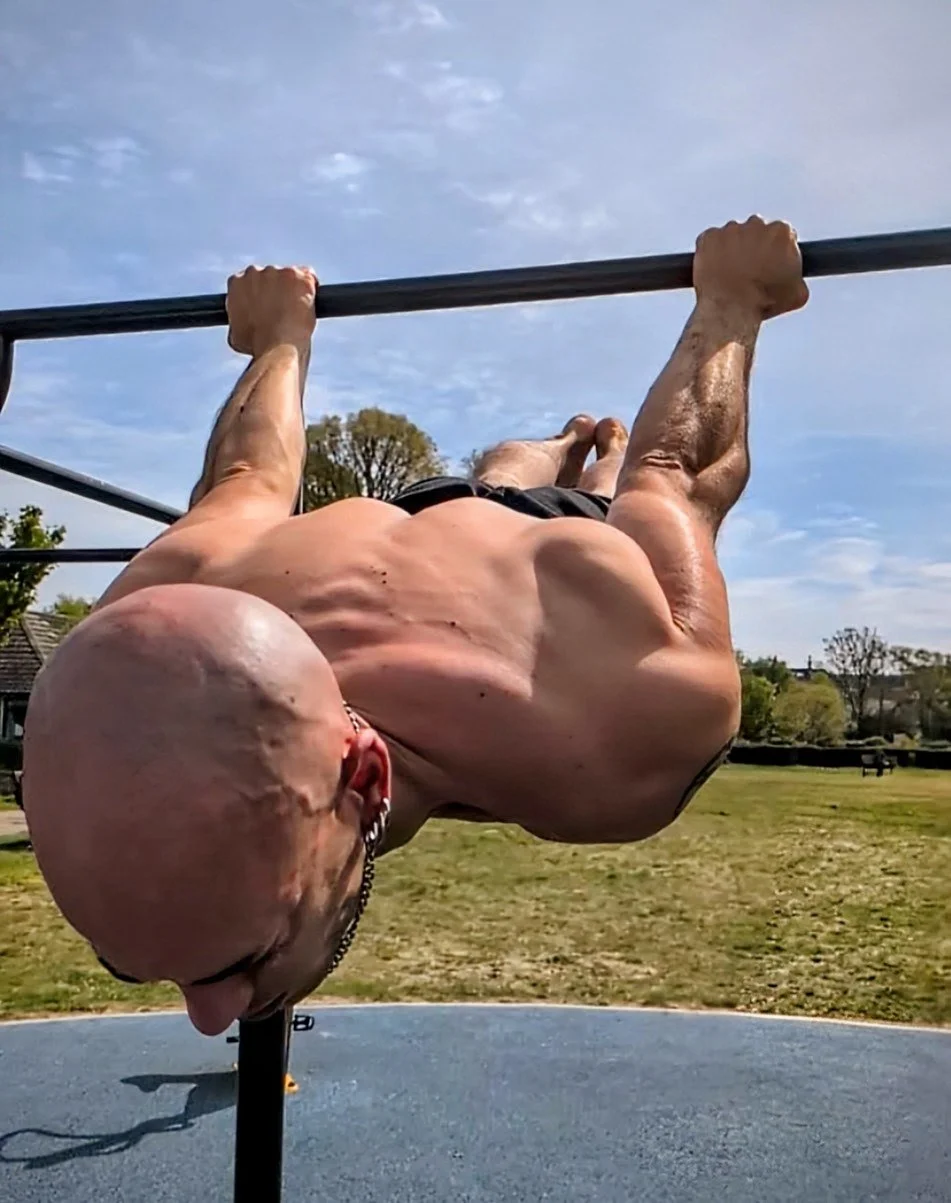
From the point of view of preparing your joints and tendons, the back lever is one of the exercises on this list that I would approach most cautiously.
You’re holding your body horizontally, facing the floor, with your arms straight and behind your torso. That is already a considerable demand on your shoulders and arms, before we even start talking about maintaining a clean body position.
Honestly, I find it difficult to understand why this gets presented as a beginner skill. Personally, I would put the full back lever closer to an intermediate calisthenics skill. It’s a major achievement in its own right.
Like the German hang, it involves supporting your weight with your arms behind your body. But now you’re also holding your body out horizontally, which creates a different strength demand. Being comfortable in a German hang doesn’t automatically mean you’re prepared to hold a back lever.
And that’s the point: being able to get into a position is different from being prepared to train it repeatedly.
There are ways to make the exercise more manageable. Tucking your knees brings your body weight closer to your shoulders, reducing the leverage. From there, you can gradually work towards more extended positions.
Hand orientation also changes how the position feels and how the upper limb is loaded.
Another thing that can be misleading is the comparison with the front lever. Some people achieve a back lever earlier and find it less demanding in terms of muscular strength. But achieving one skill sooner doesn’t mean every structure involved is ready for large amounts of training.
For me, this is a skill to introduce later, after developing a foundation of strength, shoulder control, and tolerance to straight-arm loading. Then the specific preparation should build gradually, using assistance and manageable progressions.
That process can be lengthy. For some people, the overall journey may take years, depending on their starting point, consistency, and how their body responds. That isn’t a fixed tendon-adaptation timeline or a rule that everyone must wait years before beginning preparation.
It’s an impressive movement. Give yourself time to prepare for it.
L-SIT
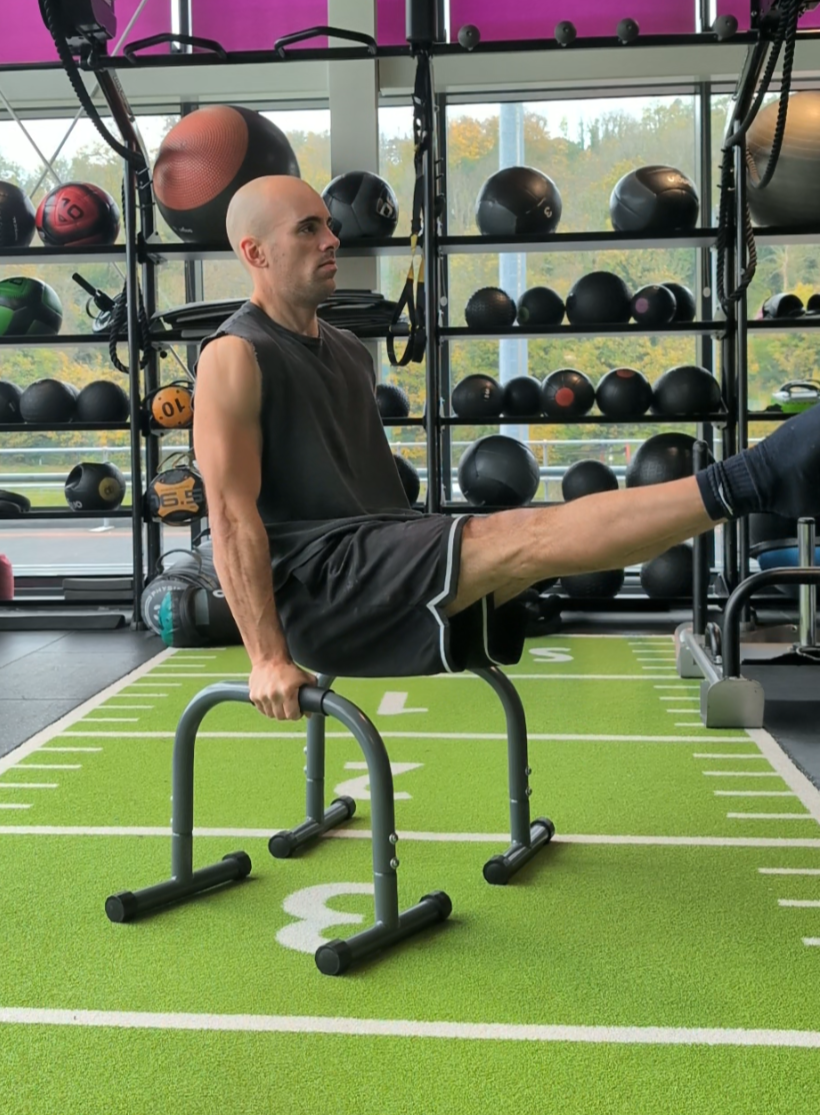
This one might surprise you: the L-sit.
Not because it’s an unrealistic goal for a beginner, but because its difficulty is often underestimated.
Many people think, “I can’t do an L-sit because my core isn’t strong enough.” Core strength certainly matters, but it isn’t the only factor. You can have strong abdominals and still struggle to lift your feet off the floor.
Think about everything the position requires. Your arms and shoulders have to support your body, actively pushing down to keep your hips lifted. Your hip flexors have to hold your legs out in front of you, while your quadriceps keep your knees straight. You also need enough hamstring flexibility to maintain that position. All these elements have to work together.
IIn my coaching experience, many beginners who have spent 20 or 30 years working at a desk arrive with limited hamstring flexibility and struggle to lift and hold their legs straight. These limitations can become very noticeable when they try an L-sit. Before expecting them to hold the full position, we need to spend time developing that flexibility and hip flexor strength.
And that takes time. Some people bring enough strength and flexibility to learn the position relatively quickly. Others need a longer period of preparation. There isn’t one timeline that applies to everyone.
So my message here is slightly different from the other exercises: don’t be too harsh on yourself if you cannot do an L-sit yet.
I wouldn’t put it in the same difficulty category as a tuck planche or a back lever,but it doesn’t mean every beginner should be able to achieve it straight away.
