10 best calisthenics exercises for climbers
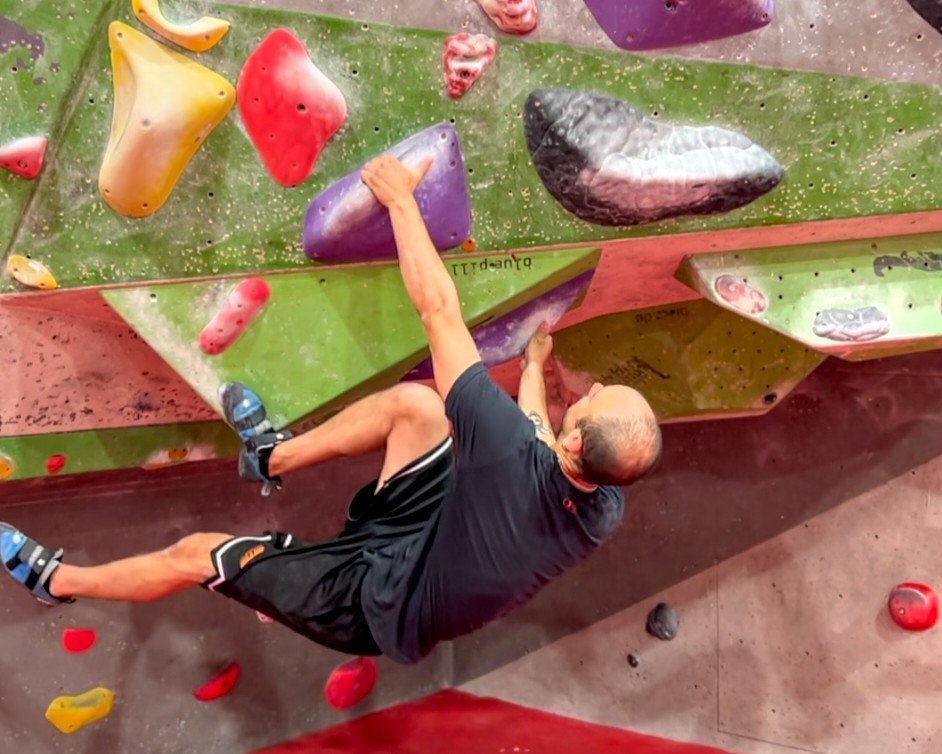
I’ve been climbing on and off for many years, and whenever I spend time at a climbing gym, I notice how often climbers incorporate calisthenics exercises into their training.
It makes perfect sense. Climbing requires a combination of pulling strength, core stability, body control, and mobility, all qualities that can be developed through calisthenics.
Some of my own clients here in Brighton are climbers who started working with me specifically because they wanted to become stronger and improve their performance on the wall.
Of course, every climber is different. Your weaknesses, climbing style, experience, and current level will determine what you should prioritise. Someone who lacks pulling strength may need a completely different approach from someone who is already strong but struggles with core stability or mobility.
However, there are several calisthenics exercises that I think can be particularly useful for climbers. In this article, I’m going to break down some of my favourites and explain why they can transfer well to climbing.
I’m deliberately leaving out climbing-specific exercises such as hangboard training, and other finger-strength work. Instead, this list will focus on general calisthenics exercises that can complement your climbing training and help you build a stronger, more capable body.
PULL UPS / CHIN UPS
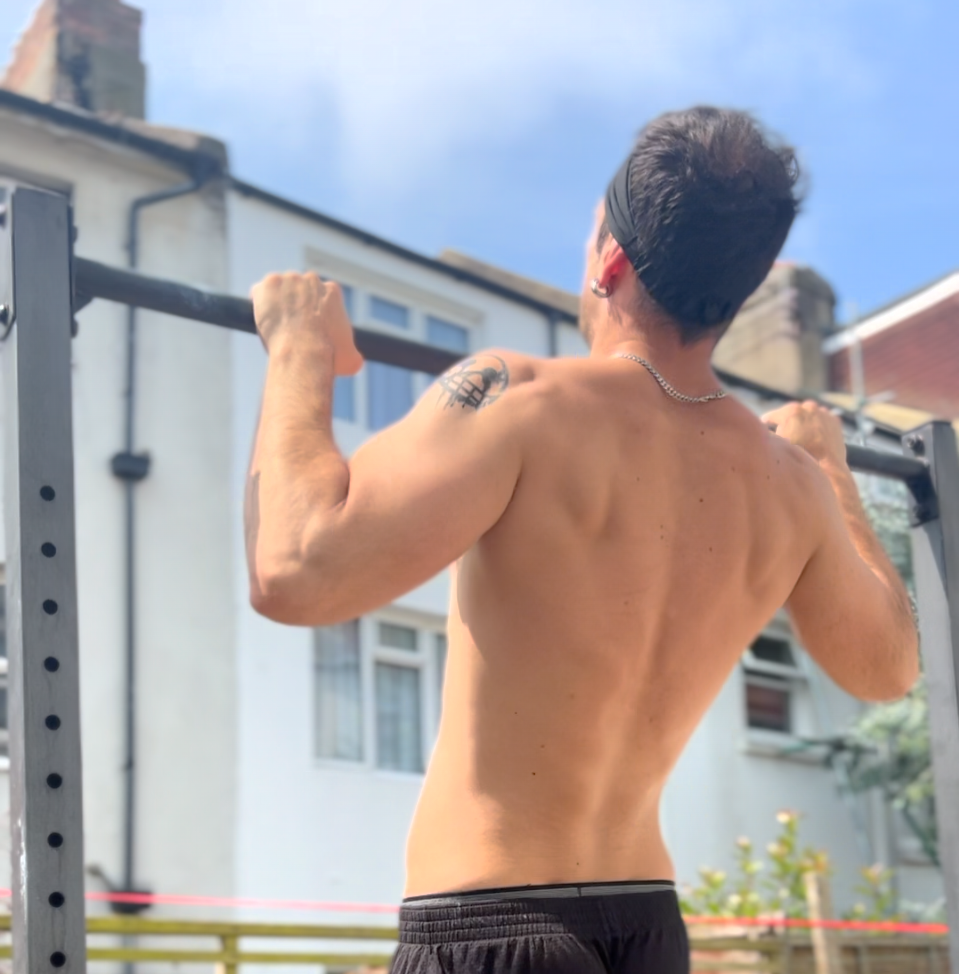
This is probably the most obvious exercise on the list. Improving your vertical pulling strength can be very useful for climbing, particularly for beginners and intermediate climbers.
However, don’t expect pull-ups to work magic. Some of the best climbers in the world can perform incredibly strong pulling movements, while others can’t even do a one-arm pull-up. The reality is that climbing technique is still far more important than simply being strong at pull-ups.
When it comes to exercise selection, I generally consider a pull-up ( overhand) slightly more specific to climbing than a chin-up (underhand) because of the position of the hands. That doesn’t mean chin-ups are useless; they’re still a great exercise, but generally speaking, a pronated or more neutral hand position tends to be more relevant to the positions you encounter while climbing.
It’s also worth distinguishing between different types of pull-ups, because some variations can be particularly interesting for climbers.
Archer Pull-Ups
Archer pull-ups shift more of the work towards one arm at a time.
Think about climbing: how often are you pulling with the same amount of force through both arms? Not often; one arm is doing most of the pulling while the other is maintaining contact, stabilising the body or preparing for the next movement.
For this reason, archer pull-ups, performed either on a bar or rings, can be an interesting way to introduce asymmetrical pulling strength without immediately jumping into advanced one-arm pull-up training.
Ring Pull-Ups
I personally really like ring pull-ups for climbers.
The rings allow your hands and shoulders to rotate naturally throughout the movement, rather than forcing you into one fixed position. This can make them more comfortable on the joints for some people and gives you more freedom to change your hand orientation.
That freedom is particularly interesting for climbers because, on the wall, your hands and arms are constantly working from different positions and angles.
Fat-Grip Pull-Ups
Fat-grip pull-ups increase the demand on your hands and forearms because holding a thicker surface requires more grip effort.
They can therefore be an interesting variation if you want to challenge your grip while still training vertical pulling strength.
One-Arm Pull-Ups
The one-arm pull-up is definitely not mandatory for becoming a good climber.
I would only recommend specifically training this skill if you enjoy it, if developing maximal pulling strength is one of your goals, or if you have a specific reason to include it in your programme.
That said, some strong climbers do train one-arm pull-ups and find them useful. They require a very high level of unilateral pulling strength and body control, so for advanced climbers they can certainly be an interesting addition to a strength programme.
BODY ROWS
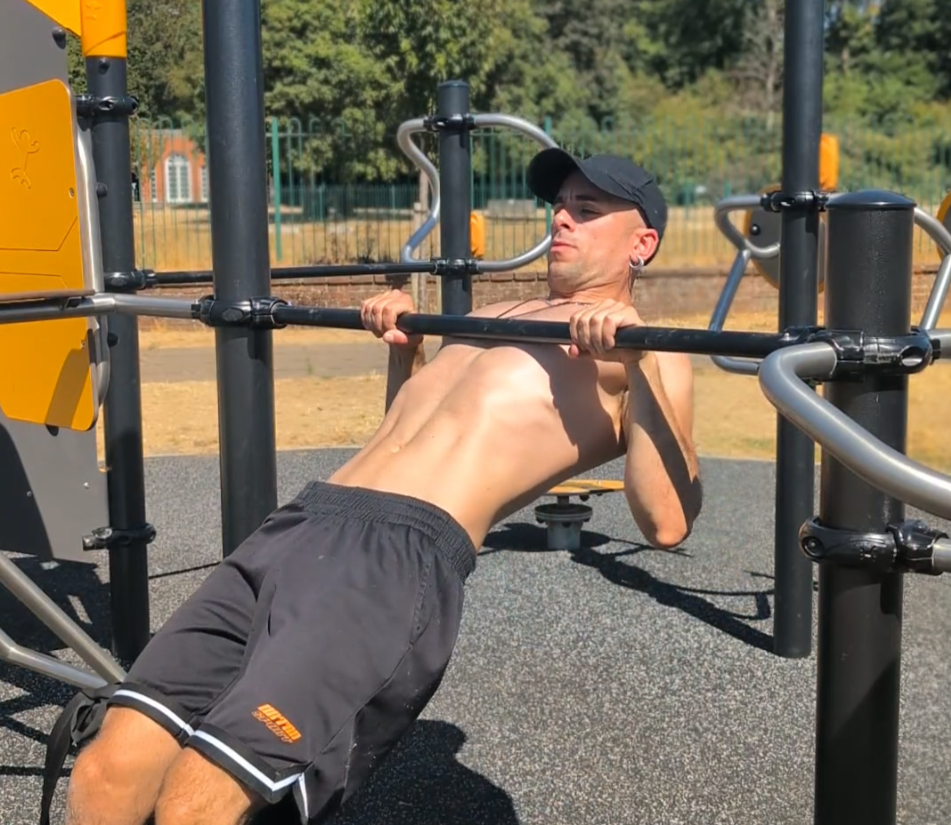
I love this exercise for climbers! I genuinely think rows are underrated and, in certain situations, they can actually be more relevant than traditional pull-ups.
Think about climbing on a steep overhang or a roof. Your goal isn’t always to pull your body vertically upwards. Often, you’re trying to pull your torso toward the wall.
From a biomechanical point of view, this can have similarities to a rowing movement.
In a pull-up, your arms start overhead, and you primarily pull your body upwards towards your hands. In a row, your arms are positioned more in front of your body, and you pull your torso towards your hands. Depending on your position on the wall, climbing can involve elements of both.
When your feet are on the wall and your hands are holding an overhanging section, gravity is trying to pull your body away from the wall. Your upper body therefore has to contribute to keeping your centre of mass closer to the wall while you move between holds.
This requires a combination of elbow flexion, shoulder extension/adduction and scapular control, alongside a huge contribution from the core and lower body. Your lats, biceps, brachialis, posterior shoulder muscles and scapular stabilisers all contribute, although their exact role changes depending on your body position and the direction of the hold.
And just like with pull-ups, you can experiment with many different variations depending on what you want to develop.
Archer rows shift more of the load towards one arm and introduce an asymmetrical component, which can be particularly interesting considering how rarely climbing involves perfectly symmetrical pulling.
Single-arm rows with trunk rotation allow you to combine unilateral pulling with controlled rotation of the torso. This can be useful for developing strength through positions where your shoulders and hips aren't perfectly square.
Partial-ROM rows can be used to strengthen specific joint angles. Climbing frequently requires you to maintain tension or produce force without moving through a complete range of motion.
Weighted rows are a simple way to progressively overload the movement once bodyweight variations become too easy.
You can perform these exercises using rings, a bar, TRX, or other suspension systems. Personally, I particularly like rings because they allow the hands and shoulders to move more freely and make it easy to experiment with different body positions and pulling angles.
Of course, a row in the gym isn't identical to pulling yourself into the wall while climbing. The direction of gravity, your points of contact, the orientation of the holds, and the contribution from your feet all change the mechanics.
But that's not really the point.
The goal of strength training isn't necessarily to perfectly reproduce climbing. It's to develop physical qualities that you can then express through your climbing technique.
COSSACK SQUAT
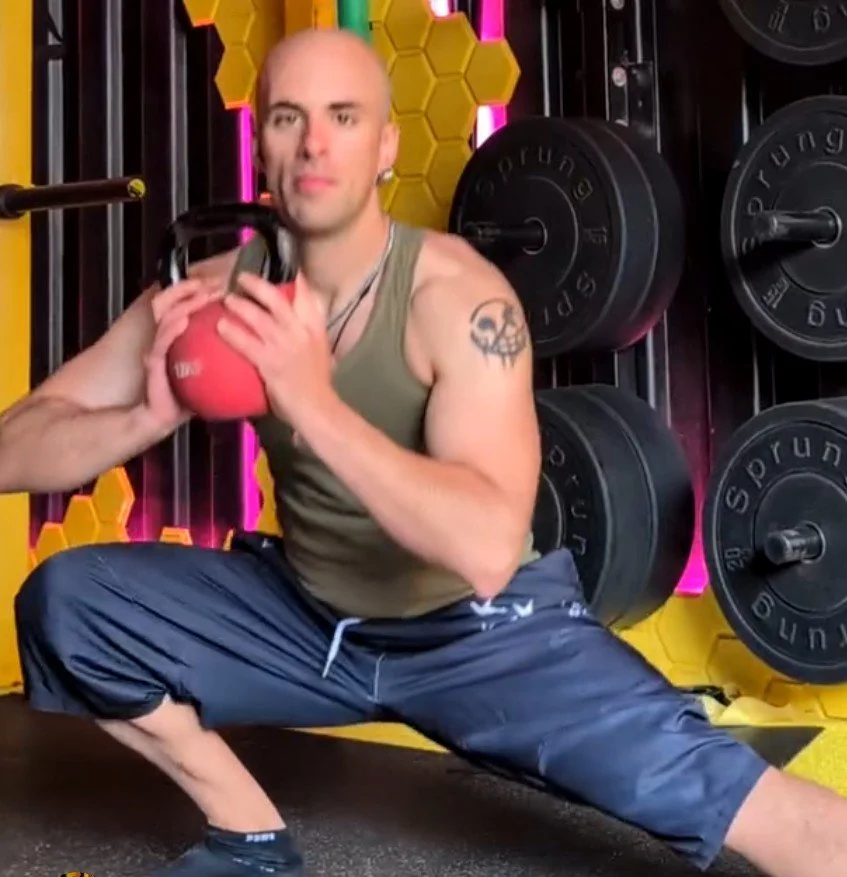
The Cossack squat combines strength and mobility, and in my opinion it has everything you want from a great lower-body exercise for climbers.
Climbers certainly need lower-body strength, but they also need a good amount of hip mobility and control. Without it, movement on the wall can become less efficient, and certain positions can be much harder.
Think about all the situations where you need to bring one foot high, move your hips towards one side, open your hips to stay close to the wall, or produce force from a deep and asymmetrical position. Having strength is useful, but you also need to be able to comfortably access those ranges of motion.
This is where the Cossack squat becomes particularly interesting.
Unlike a traditional squat, the Cossack squat shifts most of your bodyweight towards one side while the opposite leg remains extended. This challenges the working leg through a deep squat position while simultaneously placing the opposite hip and adductors through a large range of motion.
In other words, you're not just developing flexibility; you are learning to control and produce force through that ROM! For climbing, I find this much more interesting than simply being flexible.
But it's not an easy exercise
Unfortunately, the Cossack squat isn't immediately accessible to everyone. Even performing a good bodyweight repetition without compensation requires a reasonable amount of hip and ankle mobility.
The good news is that you can regress the exercise.
One variation I particularly like is performing the Cossack squat with the bending leg elevated on a small step or box. This reduces some of the mobility demands and can make it easier to maintain a good position.
Adding load
Once you can perform the movement comfortably, you can also start adding weight.
Holding a dumbbell or kettlebell in front of your body is one of my favourite options. The weight acts partly as a counterbalance, which can actually make it easier to maintain a more upright torso, while also increasing the strength demands of the exercise.
More advanced lifters can also perform Cossack squats with a barbell on their back to progressively increase the load.
Get strong through the range of motion you can control, gradually expand that range, and you may find that positions on the wall that previously felt awkward start to feel much more natural.
STEP UP & PISTOL SQUAT
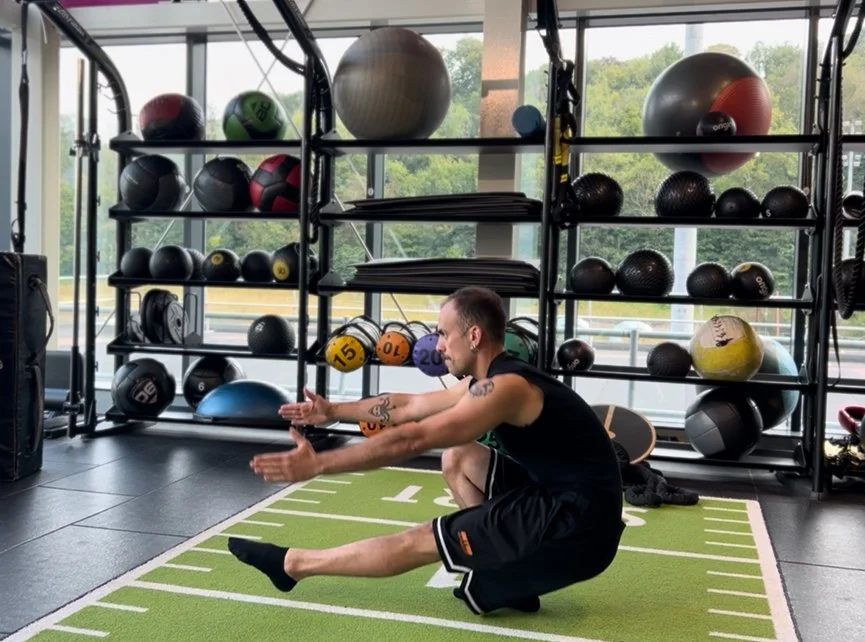
Talking about single-leg strength, step-ups and pistol squats are two of my favourite exercises for climbers, alongside more traditional strength exercises such as the barbell squat.
Step-Ups
The step-up is probably the most accessible of the two, and its simplicity is one of its biggest advantages.
You can regress it all the way down to a very low step and gradually increase the height as you become stronger and more comfortable. You can also progressively add load using dumbbells, kettlebells or a barbell.
For climbing, the movement has an obvious application.
Think about placing one foot on a relatively high hold and using that leg to push your body upwards. The upper body might help, but being able to produce force efficiently through the leg can reduce how much you need to rely on your arms.
By changing the height of the step, you can also train strength from different hip and knee angles. A higher step places you into a deeper starting position, which can be particularly interesting for climbers who need to generate force after placing a foot high on the wall.
Of course, a step-up isn't identical to climbing the wall, footholds and body position completely change the movement, but as a simple way to develop unilateral leg strength, I think it's one of the best exercises you can choose.
Pistol Squats
On the other hand, we have the pistol squat.
I consider the pistol squat an important exercise, but not necessarily because it's the best exercise for developing huge amounts of leg strength.
There are people who can perform pistol squats with extremely heavy additional loads, but if your only objective is maximal lower-body strength, there are generally more efficient and easier-to-progress exercises available.
What makes the pistol squat interesting to me is how many physical qualities it requires at the same time.
To perform a good pistol squat, you need single-leg strength, ankle mobility, hip mobility, balance, coordination, and enough trunk control to maintain your position throughout the movement.
Because of this, working towards a pistol squat can highlight limitations that you might not notice during simpler bilateral exercises.
Maybe one side feels considerably stronger than the other. Maybe you can comfortably reach the bottom position on your right leg but struggle on your left. Perhaps your heel wants to lift because you don't have enough ankle dorsiflexion, or you struggle to control your pelvis and trunk as you descend.
The pistol squat itself doesn't tell you why these differences exist, so I wouldn't use it as a diagnostic test. However, it can be a useful movement for exposing differences in strength, mobility, balance, and motor control between sides.
One common limitation is ankle dorsiflexion. A pistol squat requires a considerable amount of movement at the ankle, particularly if you want to keep the heel down while reaching a deep position. Ankle mobility can certainly be improved, although individual anatomy will influence how much range of motion someone can ultimately achieve.
Fortunately, just like the step-up, the pistol squat can be regressed. You can squat onto a box, use a counterweight, hold onto something for assistance or gradually increase the available range of motion as your strength and mobility improve.
For me, the goal isn't necessarily to perform the heaviest pistol squat possible. It's about developing strong, mobile, and well-controlled legs independently from each other.
Build a good pistol squat and, even if it never becomes your main strength exercise, you've developed a pretty solid foundation of single-leg strength, mobility, and control, which can be extremely valuable when you're moving around a climbing wall.
PUSH UPS & DIPS
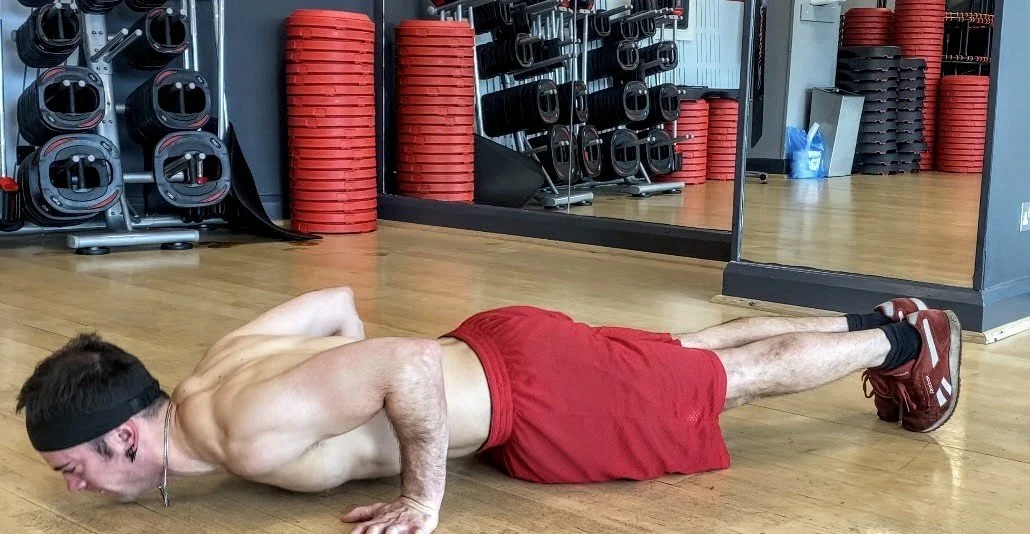
Let’s be honest: most of the upper-body strength required in climbing comes from pulling movements.
But that doesn’t mean climbers should completely neglect pushing strength.
There are situations on the wall where you actively need to push/press against a hold, pushing your body away from the wall to reposition yourself, or extending through the arms to move your body upwards. However, this isn't the only reason I like including exercises such as push-ups and dips in a climber’s programme.
Climbing involves a huge amount of pulling, gripping and holding. Your shoulders repeatedly work with the arms overhead and in different positions while your lats, biceps, forearms and other pulling muscles are constantly being challenged.
The shoulder is an incredibly mobile joint, and that mobility comes with a high demand for muscular control and stability. For this reason, I think it makes sense for climbers to develop strength through a variety of movement patterns, rather than exclusively training more pulling on top of the pulling they already perform on the wall.
Push-ups and dips give you an opportunity to strengthen the chest, triceps, and anterior shoulder while also challenging the muscles responsible for controlling the shoulder blade.
This doesn't mean that you need a perfect 1:1 ratio between pushing and pulling exercises, or that doing lots of pull-ups will automatically create a muscular imbalance. The demands of climbing are naturally pulling-dominant, and your strength training should reflect that.
The point is simply that pushing strength shouldn't be completely forgotten.
What about rings?
For both push-ups and dips, I really like using rings.
Unlike a fixed bar or the floor, rings can move independently and allow your hands and shoulders to find a more natural position throughout the exercise. They also introduce instability, meaning you have to actively control the rings while producing force.
Ring push-ups are a great place to start because you can easily adjust their difficulty by changing the height of the rings and your body angle.
Ring dips are considerably more demanding. Before progressing to them, I would make sure you already have good control and strength with regular dips and that your shoulders are comfortable with the range of motion.
You don't need to become incredibly strong at pushing exercises to become a good climber. But developing a reasonable amount of pushing strength alongside all your pulling work can contribute to a more complete and adaptable upper body.
SHOULDER EXTERNAL ROTATION ( RUBBER BANDS/CABLES/DUMBELLS )
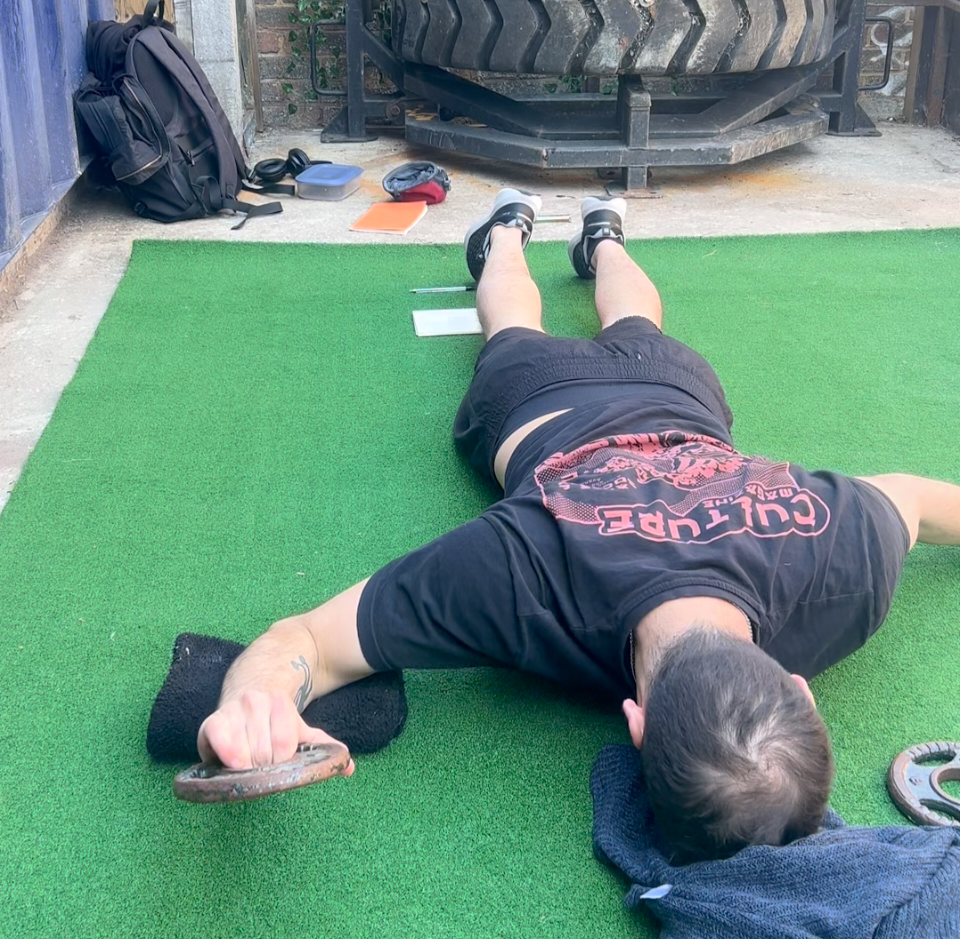
These exercises aren't necessarily going to build incredible amounts of shoulder strength. The goal here is different: building a stable shoulder.
This is particularly important in a sport like climbing, where the shoulders repeatedly have to produce and resist force through a huge variety of positions, often with the arms overhead.
The rotator cuff plays an important role here. These muscles help control and stabilise the head of the humerus within the shoulder joint while your arm moves. Developing adequate strength in the external rotators, alongside the other muscles that control the shoulder and scapula, can therefore be a useful addition to a climber's training.
You don't need anything complicated either.
Resistance bands, cables and dumbbells can all be used effectively. Exercises such as external rotations at different shoulder angles can help you progressively strengthen these muscles without adding a huge amount of fatigue to your training.
I personally see this type of work as supporting work rather than performance work. You probably won't suddenly become a better climber because you've improved your cable external rotation, but building stronger and better-controlled shoulders can help prepare them for the repeated demands that climbing places on them.
And considering how much stress climbers place on their upper body, spending a small amount of your training time developing your shoulders outside of your usual pulling movements can be a worthwhile investment.
LEG RAISES
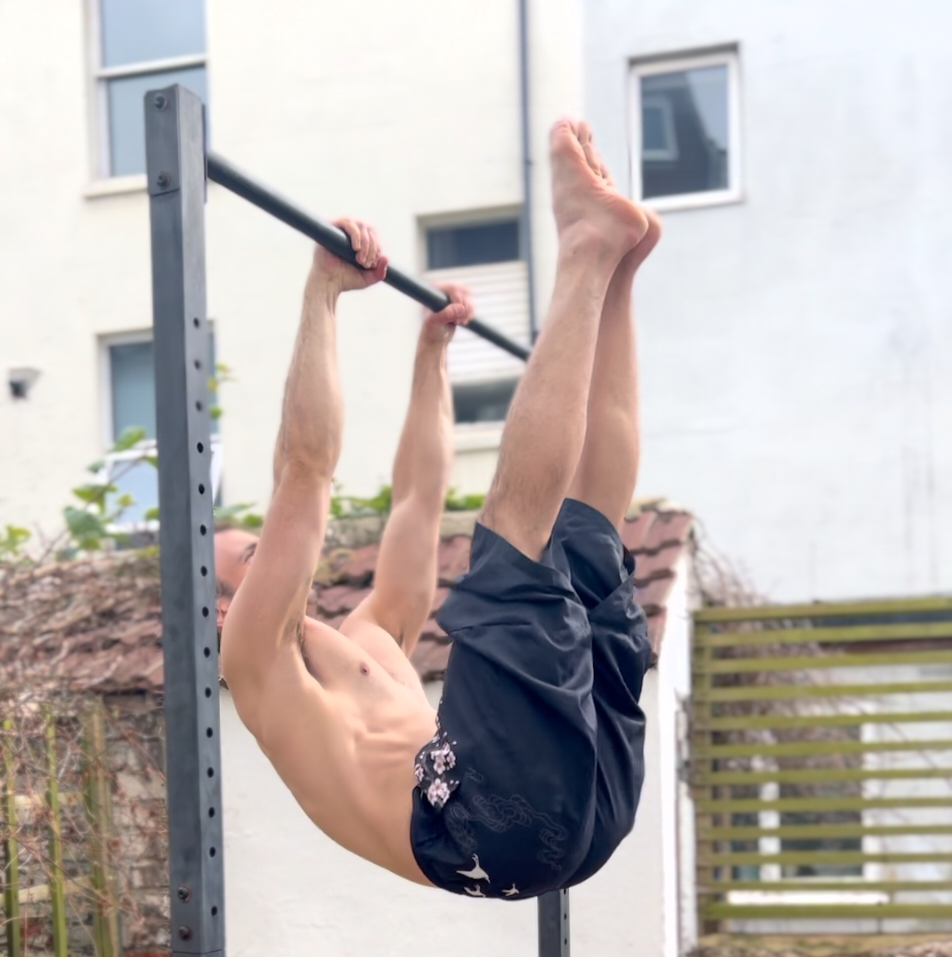
Let’s move on to core training, starting with dynamic core exercises.
One of my favourite exercises in this category is the hanging leg raise. It combines core strength with hip flexion.
To perform a good hanging leg raise, you need more than just strong abs. You need sufficient hamstring flexibility to lift the legs while keeping the knees straight, strong hip flexors, and enough overhead shoulder mobility to maintain a comfortable hanging position.
This combination is one of the reasons I like the exercise for climbing.
How to progress the hanging leg raise
The exercise is also very easy to adapt to different levels.
If straight-leg raises are currently too difficult, start with hanging knee raises, bringing your knees towards your chest while maintaining control of your body.
From there, you can gradually extend the legs until you can perform straight-leg raises to approximately parallel with the floor.
Once that becomes comfortable, you can continue increasing the range of motion and work towards bringing your feet all the way towards the bar.
However, don't become obsessed with simply getting your feet higher. As the legs travel above parallel, your pelvis and spine need to contribute more to the movement. The goal should be to perform the exercise with control, rather than creating momentum by swinging the body.
You can also experiment with variations such as alternating leg raises or moving the legs towards one side.
HOLLOW BODY POSITION
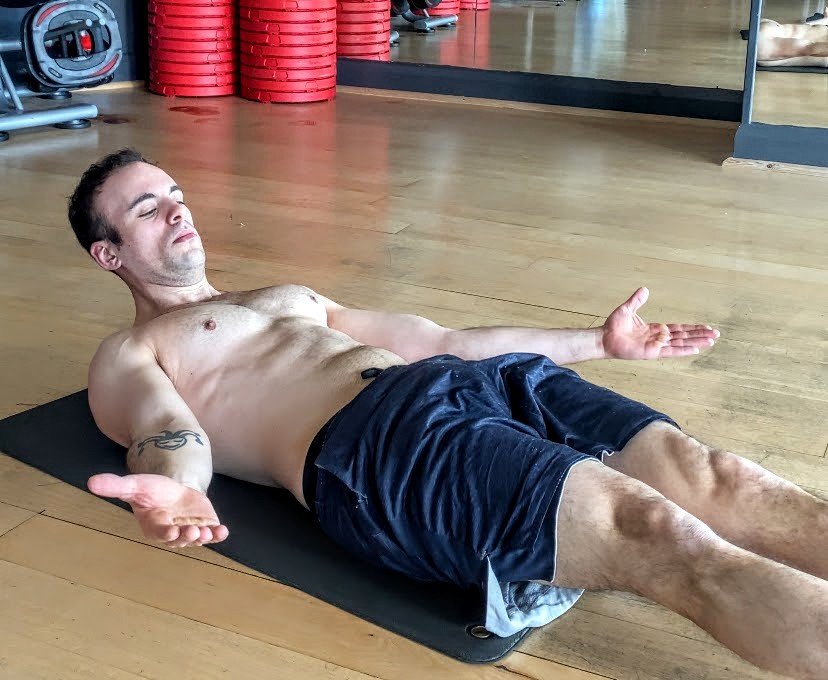
You have no idea how many people struggle to hold this apparently simple position for even 20 seconds without starting to shake.
This is where we move from dynamic core exercises to isometric strength,producing muscular tension while maintaining a relatively static position.
The hollow body hold is a staple of calisthenics training, and for good reason. It teaches you to create tension through your entire trunk while controlling the position of your pelvis, ribcage, arms and legs at the same time.
For climbers, this ability becomes particularly interesting on steep and overhanging terrain. When your hands and feet are separated across different holds, your core has to help connect your upper and lower body and resist gravity pulling your hips away from the wall.
A strong core isn't just about producing movement. Sometimes its job is to prevent unwanted movement and maintain body tension while your arms and legs are doing something else.
How long should you hold it?
As a practical benchmark, I like my clients to work towards a controlled 60-second hollow body hold.
That doesn't mean that 60 seconds is a scientifically defined threshold for having a “strong core”, but if you can maintain a good hollow position for that amount of time, without losing pelvic control, excessively arching your lower back or changing the position to make it easier,you've developed a solid base of isometric core endurance.
If you can't maintain the full position yet, simply make it easier. Bend your knees, bring your arms alongside your body or shorten the lever by bringing your legs closer towards you.
Then progressively make the position harder as your strength improves.
ANY TRUNK ROTATIONAL MOVEMENT
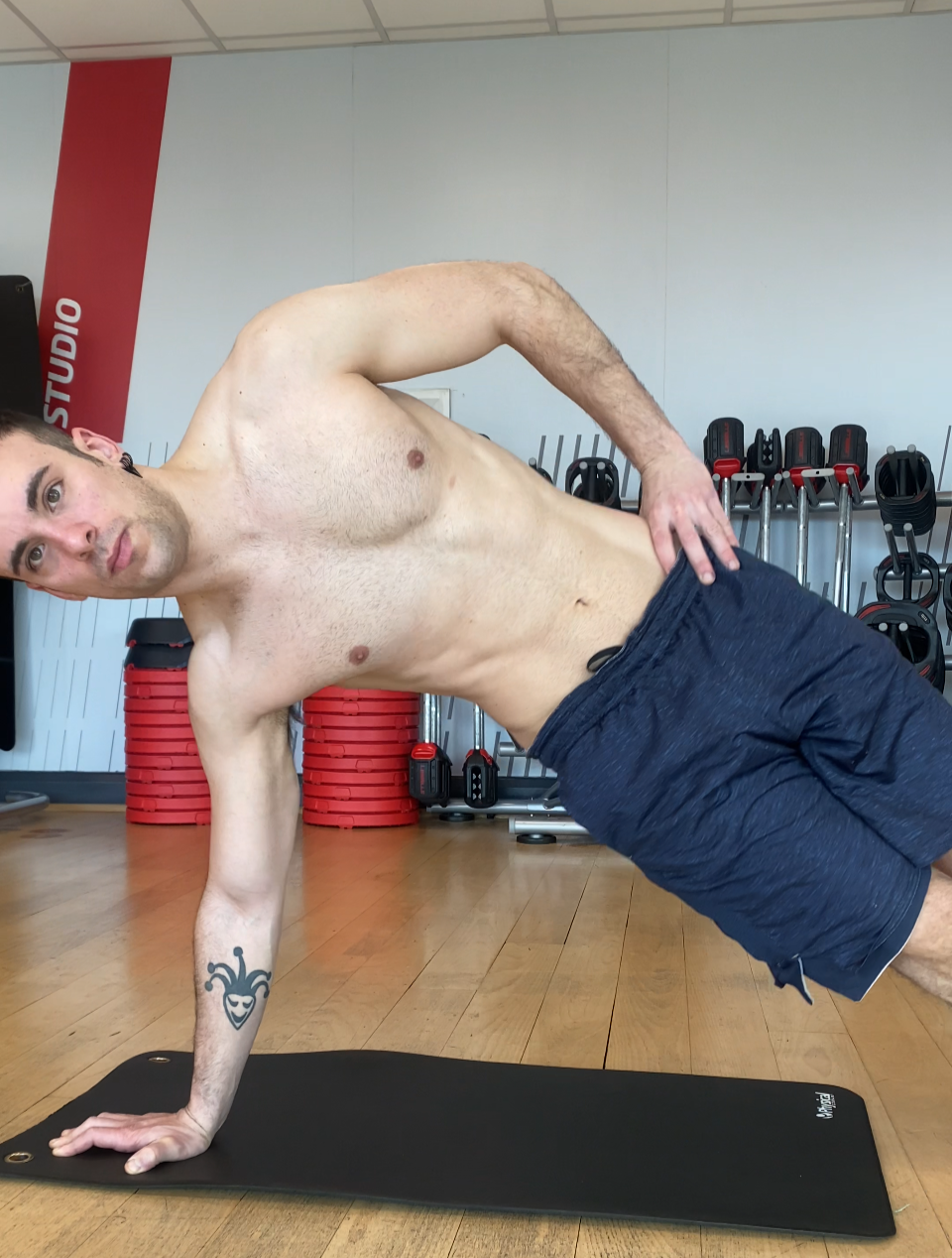
Don't neglect your obliques and rotational core strength.
So far, we've talked about dynamic exercises such as hanging leg raises and isometric exercises such as the hollow body hold, but your core also needs to be able to produce and resist rotation.
This is particularly relevant to climbing because your body is rarely working in a perfectly symmetrical position. You might have one hand above your head, the opposite foot pushing into a hold and your hips rotating towards or away from the wall.
In these situations, your core helps transfer force between your upper and lower body while controlling the position of your trunk and pelvis.
This is where rotation and anti-rotation become important.
Rotational exercises train your ability to actively rotate the trunk, while anti-rotation exercises challenge you to resist an external force that is trying to rotate you. Both can be useful qualities to develop alongside your other core work.
There are plenty of exercises to choose from:
Dynamic side planks
Pallof presses
Cable wood chops
Russian twists
And the list goes on.
You don't need to include every possible variation. Choose one or two exercises that complement the rest of your training and progressively make them stronger over time.
The main point is simple: don't train your core in only one direction. Climbing is a three-dimensional sport, and your core training should reflect that.
HANGING
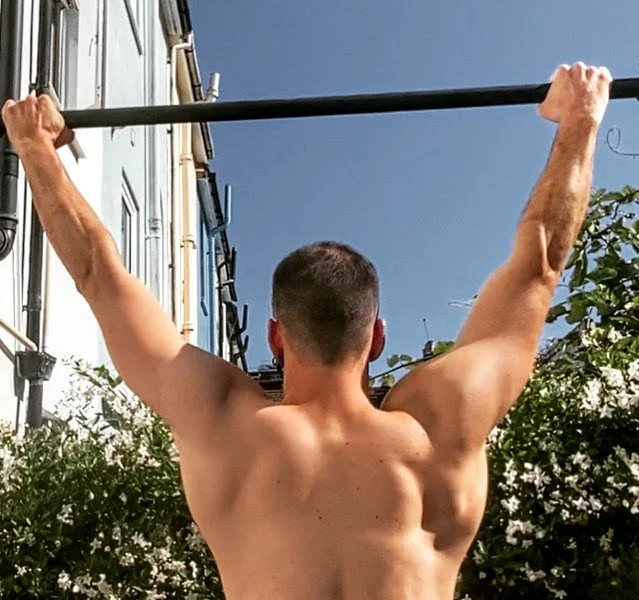
It doesn't get much simpler than this: grab a bar and hang.
Hanging might look too basic to deserve a place on this list, but for climbers it can be a useful addition to general strength training.
The most obvious benefit is grip endurance. Supporting your bodyweight for time requires the muscles of the hands and forearms to work continuously,something climbers are obviously very familiar with.
However, hanging isn't just about your grip.
It also exposes your shoulders to an overhead position while they support your bodyweight. Depending on how you perform the exercise, you can use a more relaxed passive hang or an active hang, where you maintain more muscular tension around the shoulder girdle and slightly depress and control the shoulder blades.
I particularly like active hangs because they teach you to maintain control while suspended from your arms. You can also progress into scapular pull-ups, moving between a relaxed and active position without bending the elbows.
There are plenty of ways to make hanging more challenging or simply different:
Active hangs
One-arm assisted hangs
One-arm hangs
Scapular pull-ups
Fat-grip hangs
Towel hangs
Different grip positions
Just remember that hanging from a bar is not the same as climbing-specific finger training. A bar allows you to wrap your whole hand around it, while climbing holds can place very different demands on the fingers depending on their shape, size and grip position.
So if your goal is specifically to improve finger strength for climbing, climbing itself and appropriately programmed hangboard work will be much more specific.
But as a simple calisthenics exercise for developing grip endurance, overhead shoulder capacity and control while hanging, it's difficult to beat.