How to run a calisthenics class in brighton
Over the past 2/3 years, I’ve been running calisthenics classes here in Brighton, and there are a few things I learn along the way.
One of the first questions a coach might ask before running their first calisthenics class is :
How do I structure it?
Which exercises should I include?
How much time should I spend warming up and stretching?
What equipment do I need, and if I don’t have any, can I still run classes?
Well, today I’ll answer all of these questions based on my experience.
first class ( no equipment )
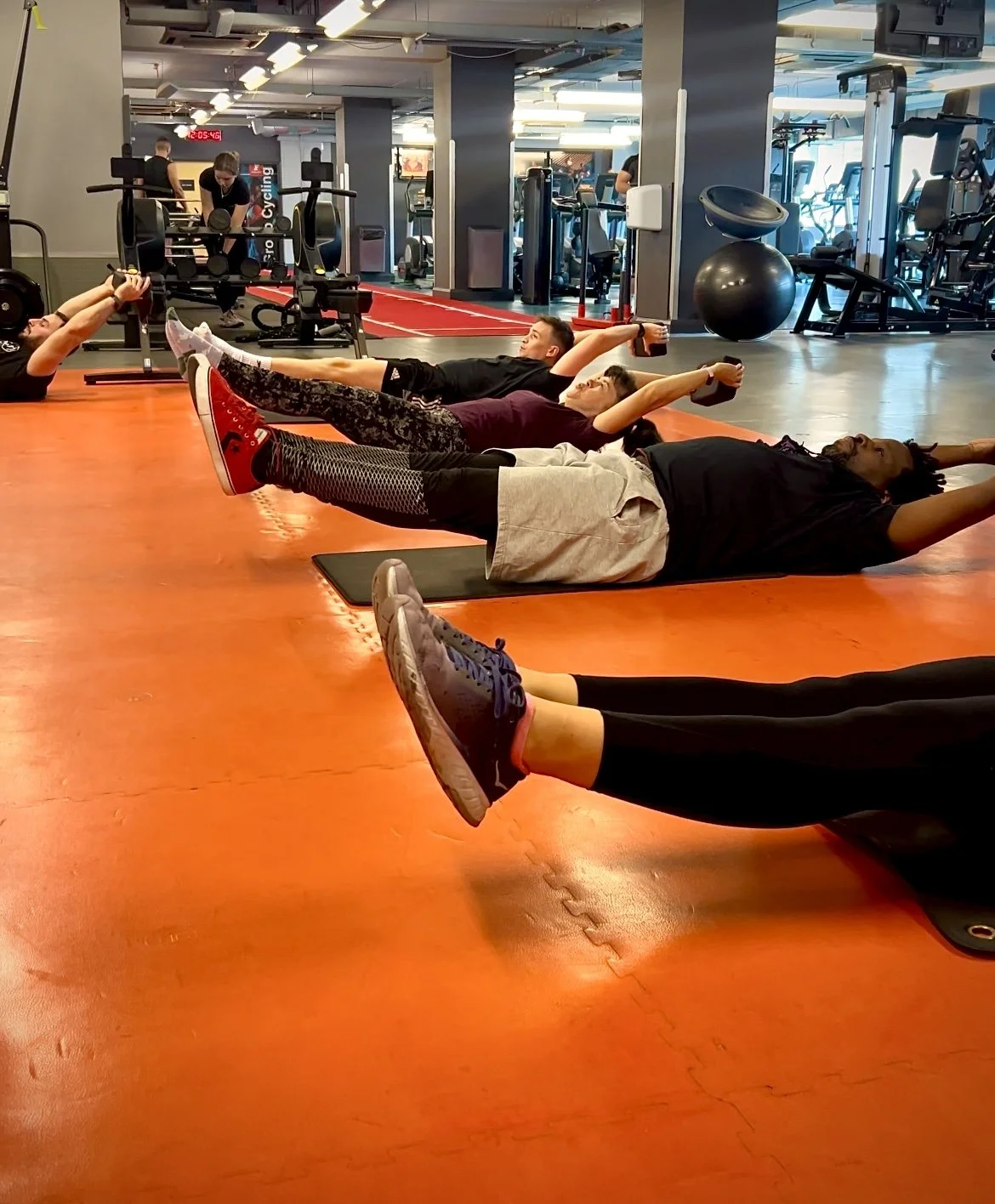
My first experience with a calisthenics class was in a gym, the manager asked me if I wanted to add a class to the Sunday timetable, and I said yes.
The only problem is that this gym didn’t have the right equipment for calisthenics. This was actually a pretty big issue.
Running a class in a gym is already more challenging than running one in a private studio; if this gym in particular doesn’t even have a pull-up bar, it becomes almost a mission impossible.
So I had to borrow a bar from a friend and bring my own parallettes.
This raised an important question :
Can I set up a class of 6 to 8 people ( sometimes up to 10 ) with only a pull-up bar a set of rings, a dip bar, a plyo box, and sand bags?
Yes, you can
But before that, you need to think about one key thing: what is your target audience?
Take into account that when you start a class, most of the people who join will usually be complete beginners. This means that you need to pay close attention to what they’re doing, and for this reason I preferred to choose one single skill and everyone works on it.
If you focus on coaching too many skills at the same time (one person working on a front lever, another on a handstand, and someone else on an elbow lever handstand, someone an elbow lever), it becomes impossible to run the class properly; you cannot be everywhere.
So the way I personally did it was :
Warm up: don’t underestimate warm-up.
I usually spend 5 minutes in a standard warm-up where everyone copies you, and then 5 minutes of group-based warm-up exercises.
Have fun and be creative. It’s a great way to establish a friendly and welcoming environment from the beginning. Many people join the class not only to learn something new, but also to socialise and be part of a group.
Skill work: depending on the day, you can either decide to focus on one single skill or to add another one after the first one.
Keep in mind that I was working in an open gym space with limited equipment: one bar, one set of ring and some dip bars, which means that most of the work had to be done on the floor.
The exercises couldn’t be too complex, because, as I said, they were beginner. So what are the options? Frog stand, headstand, elbow lever, etc…
Always show full progression. Start with the easiest one, and if it’s too easy for someone, simply move them on to the next step.
I wouldn’t worry too much about giving them detailed instructions on how many sets or repetitions. Just encourage them to practice, you’ll think about it in the future, once they get confident with the movement.
Strengthening and conditioning: I personally like to spend most of the class on strength work, as building strength helps people achieve calisthenics skills much faster. If a class has a lot of people, the best option is circuit training. For example, with 8 people, you can set up 8 stations, and make sure to include:
Leg work ( like assisted pistol squat at the TRX ).
Core work: one floor-based exercise and one on the pull-up or dip bar, plus rotational movement.
Upper body pushing
Upper body pulling
More Core ( optional ): If you still have time at the end of the class, I like to finish with a group core workout
Stretching : This is mandatory . No need for anything fancy, stretch the main muscles you used in the workout .
CLASS 2 : GOOD EQUIPMENT ,SMALL SPACE
Later that year, I was contacted by Tom and Emma, two people I had met at a calisthenics park about a year earlier. They had also started their own business, but while I chose to focus more on personal training, they decided to build a business centred around group classes.
As their classes started to do well, they asked me if I would like to run one of them. I said yes.
This time I had proper equipment . They rented space in a private gym with two rooms - one large nd one small .Most of the classes take place in the smaller room which has one bar, three sets of rings , and plenty of parallettes .
This set up offered far more options to experiment , have fun and try new things . Of course, because they were their classes, I couldn’t always do exactly what I wanted ( even though I still had quite a lot of freedom ) .
The main guideline I had to follow was the “skill of the month “
Each month, we would focus on one specific skill or one piece of equipment , such as rings, p bars, or bar skills .
Because I run always the same classes every week, the members attending were often the same . this means I didn’t need to re-explain every exercise iin detail each time, which gave me even more flexibility in how i structured the sessions.
As I mentioned earlier, this set up geve me much more freedom in class structure :
warm up: doesn’t change much compared to my first experience. General warm-up followed by group warm-up.
skills or strength: this depends on the type of class, the theme of the month, and many other factors. Most of my classes are a mix of both: starting with skill work and then moving into strength training. Exercises could range from standard pull-ups to diamond push-ups and hanging leg raises.
Some of the classes, however, can be mainly focused on foundation strength or skills .
In the second scenario, I usually do one skill at a time and show all the progressions. If the class is made by regular members, I can split the class into two and work on 2 skills altogether.
Because these classes are mixed ability ( some are stronger than others ) it ‘s not easy to keep everything under control
Core: for these classes, the core training at the end is mandatory, and I use different approaches : static holds ( hollow body, plank variations etc…) , dynamic exercises ( hanging knee raises , rocks or mountain climbers ) , and rotetional /anti-rotation ( russian twists , windshield wipers etc…)
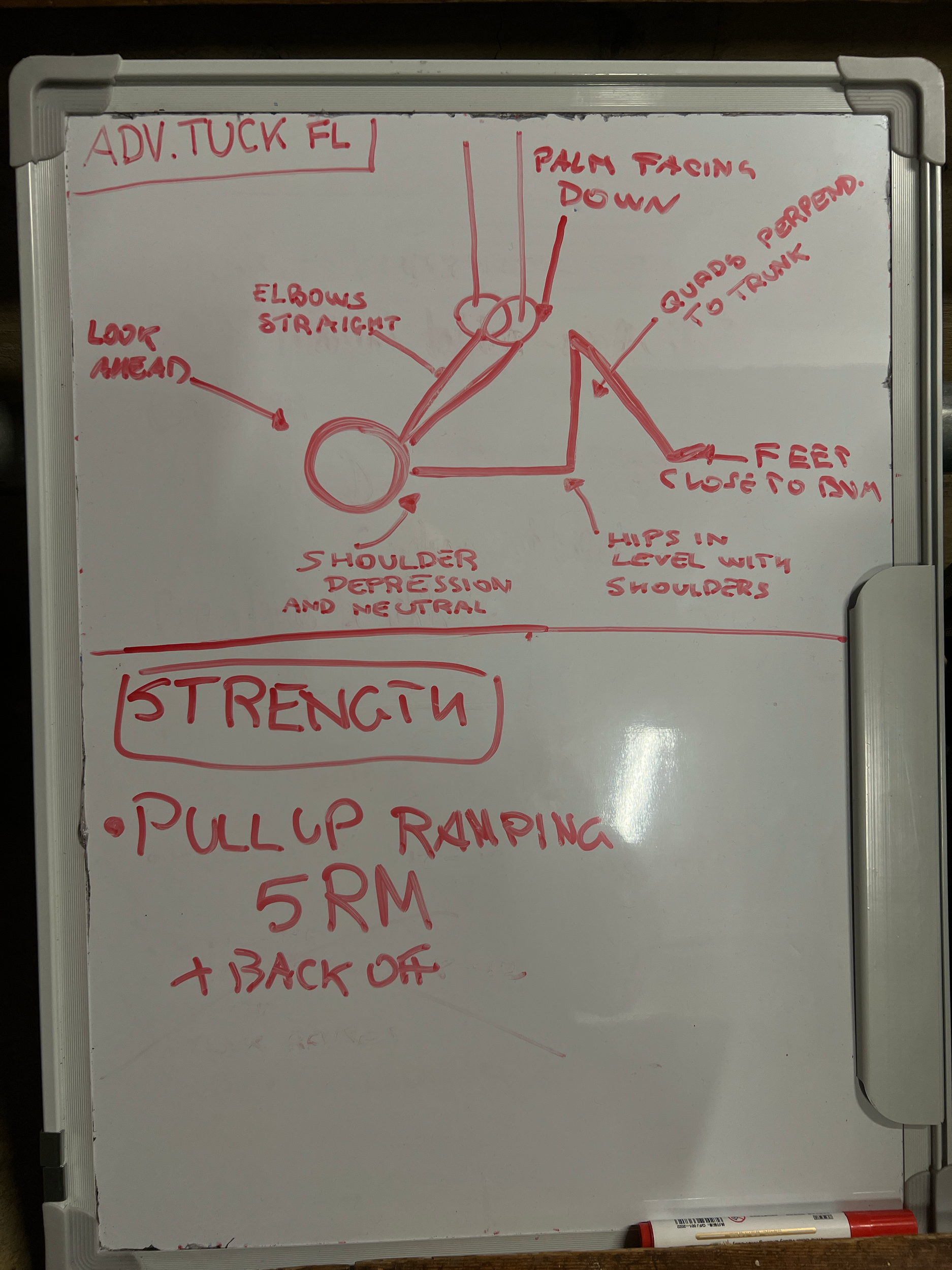
Skill of the month
This month I focused on Front lever, here an explanation of the key point to hold an advanced tuck front lever .
As previously said, some of the classes are only basics-focused, in this case, we focus on 4 exercises:
horizontal pulling: body rows, hinge rows, ring rows . Easy to scale by adjusting body angle.
vertical pulling: Pull ups , ring pull ups
horizontal pushing : push ups , ring push ups , deficit push ups.
vertical pushing : dips and sometimes pike push ups , box dips .
In this case to keep these classes more engaging and challenging , I like to play with training variables and methods, rather than changing exercises too often . An example include :
Amrap( as many reps/round as possible )
Emom( every minute on the minute )
Sets x Reps with variations in ROM ( range of motion ) , tempo, time under tension ( TUT) , etc…
Ladders and double ladders
Cluster sets
CLASS 3 : MORE FREEDOM
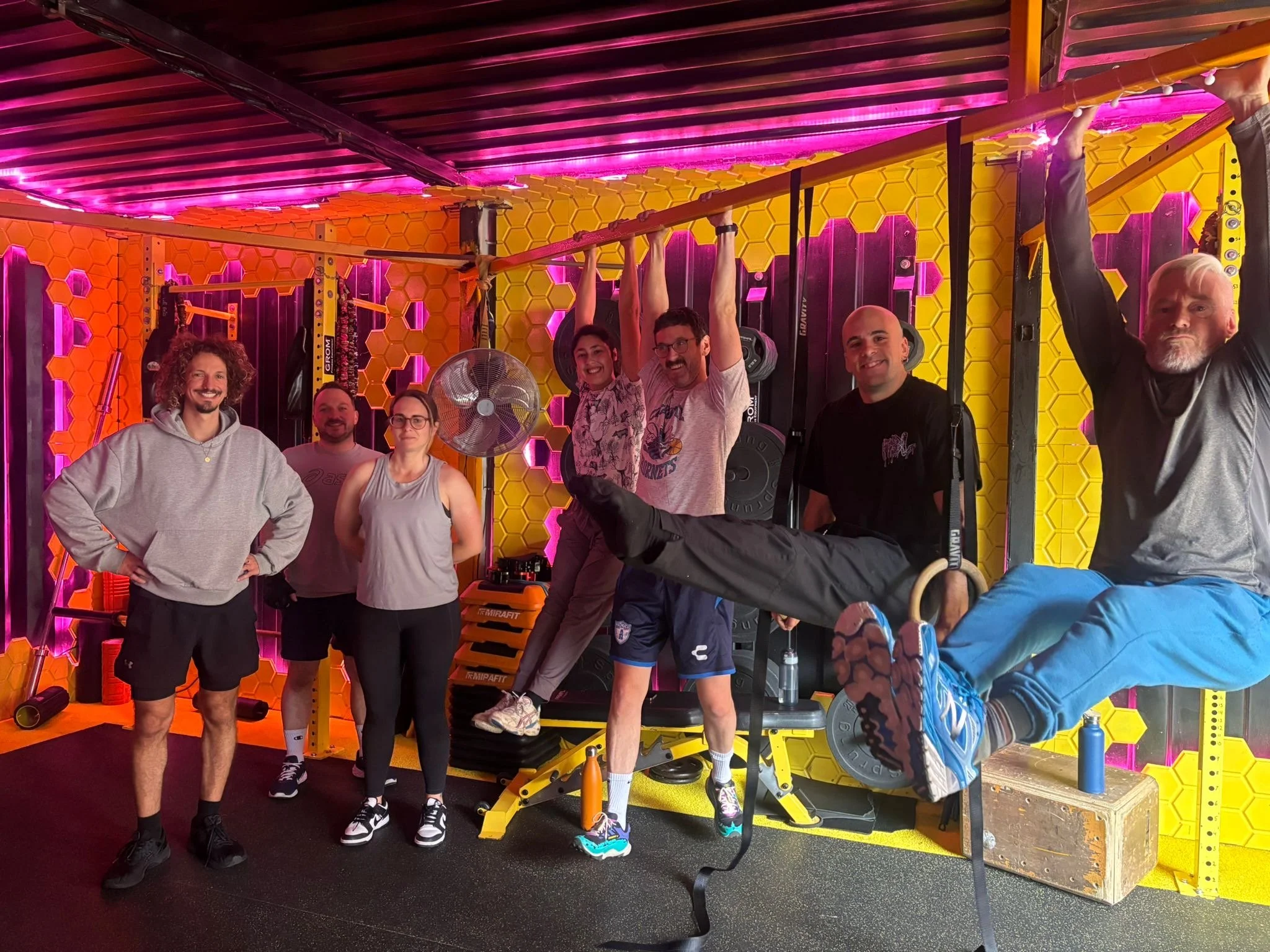
I run also my classes , in another studio , where I have access to three bars, 3 sets of rings, 2 parallettes and free weights if needed.
The vibe in these classes are slightly different. Because I also run strength classes in this studioand spend a lot of time there, I’ve builta strong and friendly connection with the people that train with me . That relationshiop naturally changes the energy of the class.
So , even though I still structure these sessions in a similar way to Class 2 , they are much fun-orientes, There’s more interaction , more games , and more relaxed atmosphere after all. This section is where I want to explain how I use that approach.
When I say games , I don’t mean that people stop training or that the worout becomes easy , . It simply means that the training structure in disguised as play .
For example :
Partner challenge using basic movements
Time-based challenges where the group works toward a shared goal
This format keeps motivation high and encourages people to push harder without overthinking it and it works well when the group already knows each other.
From my perspective, it also allows me to :
manage mixed levels more easily
keep intensity high without programming
So the format just changes to match the environment and the people in front of me.
But let’s talk about a real example :
Form a line of six people standing next to each other , all holding a low squat position . At certain point , the coach passes object of different weights ( kb , dumbells, etc…)
Each partecipant must pass the object along as soon as they receiveit. After passing the object, they perform one push up, than stand back and get ready to receivethe next one.
conclusion
Running a class it’s about adapting to the space, the equipment, and the people in front of you .
Over the years , I’ve learned that semplicity work better than complexity , expecially for beginners.
Good progressions matter more than fancy exercises. Stick with one and get stronger in that , you’ see more results.
And finally the class structure should evolve with the group .
So , whether you are running a class with no equioment, limited space, or full freedom , the principles stay the same: clear structure, smart progression and a strong group dynamic .
That’s how I approach running calisthenics classes. Obviously there is still much to learn but this is a good basics where to start .